

There is something quietly remarkable happening every time a new BBC or ITV costume drama lands on a Sunday evening. Before the credits have finished rolling, thousands of people across the UK are already typing the same things into Google, corseted silhouettes, puffed sleeves, muted florals, richly textured velvet. British period drama fashion influence in 2026 has become one of the most measurable, commercially significant forces in the British retail industry, and I’d argue it deserves far more serious attention than it typically gets from the fashion press.
We are not talking about a vague, atmospheric trickle of inspiration. The connection between what costume designers put on screen and what ends up in women’s baskets on ASOS or in the fitting rooms of independent boutiques is now remarkably direct and fast. Google Trends data consistently spikes within 24 to 48 hours of a major drama episode airing. Retailers notice. Labels notice. And increasingly, the costume designers themselves are being approached by fashion brands before a show even airs.
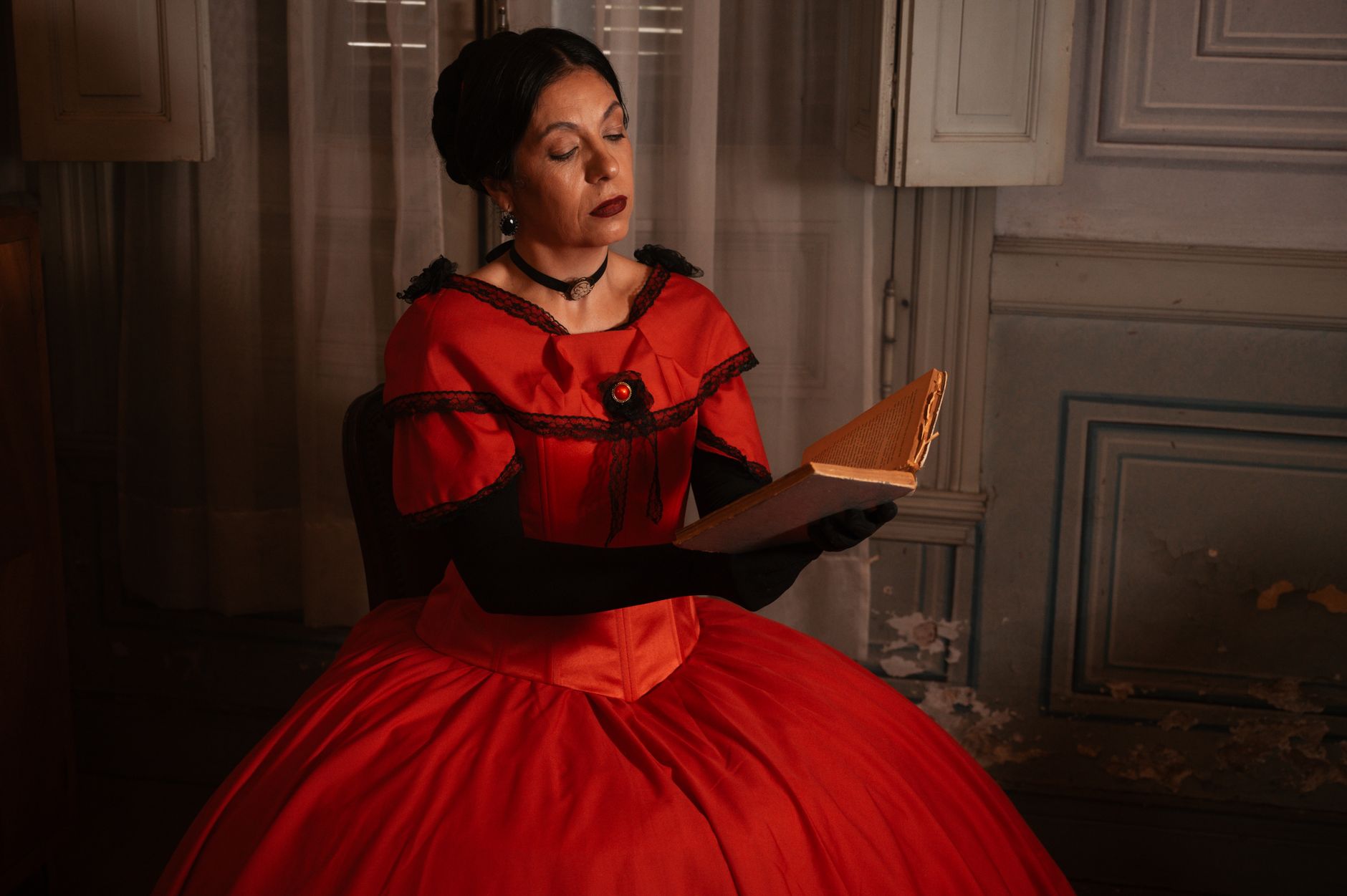
The shows currently driving real buying behaviour
The BBC’s adaptation of North & South earlier this year sent searches for Victorian-inspired high-necked blouses up by a reported 340% in the week following its premiere, according to ASOS’s own trend tracking. ITV’s drama commissions have had a similar effect. ITV drama has been quietly shaping what British women buy for years, but what’s changed in 2026 is the speed and precision of that influence. Where once a style might take a season to filter onto the high street, it now appears within a fortnight.
Netflix and Amazon Prime series get the international headlines, but British costume drama carries a specific aesthetic authority that domestic audiences trust differently. When you watch a BBC production, the research behind every garment tends to be meticulous in the historical sense, and viewers pick up on that authenticity even if they couldn’t articulate why. It makes people want the look, not just a vague approximation of it.
Which labels and high street names are benefiting most
The winners sit at two very different price points. At the accessible end, Marks & Spencer and Next have been notably quick to respond to period drama moments, dropping quietly relevant pieces, think broderie anglaise, empire-waist silhouettes, or richly textured jacquard, in the weeks around a major broadcast. These are rarely explicitly marketed as “inspired by” anything, but the timing is rarely coincidental.
At the independent end, smaller UK labels are benefiting enormously. Scotland and the North of England have been particularly active; Scottish independent designers have been disrupting British fashion with exactly the kind of heritage-inflected, craft-led collections that sit perfectly alongside the current drama moment. Labels like Edinburgh-based Stòr and Manchester’s independent scene have seen direct traffic increases they attribute directly to costume drama search spill-over. It costs them nothing in paid media. The BBC does the work.
Regencycore, Victoriana, and what comes next
The regencycore trend that dominated 2024 has not disappeared, it has matured. British period dramas have been fuelling a regencycore fashion obsession for long enough that the high street has fully absorbed it, which means the more discerning consumer is already moving on. What I’m seeing in 2026 is a shift toward late-Victorian and Edwardian references, a slightly harder, more structural silhouette than the soft Regency pastels. Think leg-of-mutton sleeves, deep jewel tones, and high collars rather than empire waists and blush gauze.
ITV’s upcoming Edwardian-set thriller (currently in post-production) is already being talked about in fashion circles before it has aired. Costume designer Nina Gold, speaking to the BBC, noted that period productions now operate with a fashion awareness that simply didn’t exist a decade ago. The line between costume and trend forecasting has blurred considerably.
How this translates into home style, too
Here’s the thing most fashion articles miss: British period drama influence doesn’t stop at the wardrobe. The same aesthetic impulse that makes someone buy a velvet midi skirt also makes them want their home to feel a certain way. Period drama interiors, those warm, textured, layered living spaces, feed directly into home renovation trends. It’s why deep greens, aged brass hardware, and richly lined curtains have dominated interior searches alongside the fashion spikes.
Homeowners in Mansfield, Nottinghamshire often turn to specialists like Vesta Blinds and Shutters Mansfield for roller blinds, perfect fit blinds, and venetian blinds when they are redesigning a room to match a particular home aesthetic, and the influence of period drama style and renovation trends is something the team at vestablinds.com are well placed to speak to. When a drama series makes layered, heritage-inflected interiors look desirable on screen, the search for window treatments that carry that sense of warmth and style follows predictably.
The connection makes sense once you see it. A house renovation inspired by Victorian or Edwardian style calls for window dressings that match, heavy fabrics, considered lines, blinds that feel intentional rather than purely functional. Vesta Blinds and Shutters Mansfield, a Mansfield, Nottinghamshire-based supply and fit specialist with a range covering vertical blinds, pleated blinds, and perfect fit options, sits squarely in the path of that demand as home style trends accelerate alongside their on-screen counterparts.
Why costume designers are the new fashion directors
I’ve been watching this shift for a while, and I think it’s worth naming directly: the people who deserve credit for some of the most influential fashion moments in British culture right now are not working at Vogue or presenting at London Fashion Week. They are in costume departments on location in Yorkshire or the Scottish Highlands, making decisions about fabric weight and silhouette that will be screen-grabbed and searched within hours of broadcast.
Costume designers like the talent behind some of the looks British actresses have been championing are shaping how the UK population thinks about style in a way that is simultaneously more democratic and more historically rooted than the traditional fashion industry. That’s worth celebrating, honestly. And it’s worth watching, because whatever drama the BBC or ITV commissions next is already, quietly, determining what we will all want to wear and how we will want to dress our homes come the new year.
Leave a Reply