

There is a very specific kind of Sunday evening in Britain: you are on the sofa, tea going cold, watching an ITV drama you told yourself you would only half-follow, and then a character appears in an outfit so precisely right that you are already typing brand names into Google before the next scene has started. I have done this. Most women I know have done this. And it turns out, the data agrees with all of us.
The ITV drama fashion influence on UK shopping is not anecdotal anymore. It is measurable, it is fast, and the fashion industry is paying very close attention to it. What used to take months to trickle from screen to high street now happens overnight, sometimes within hours of an episode airing.
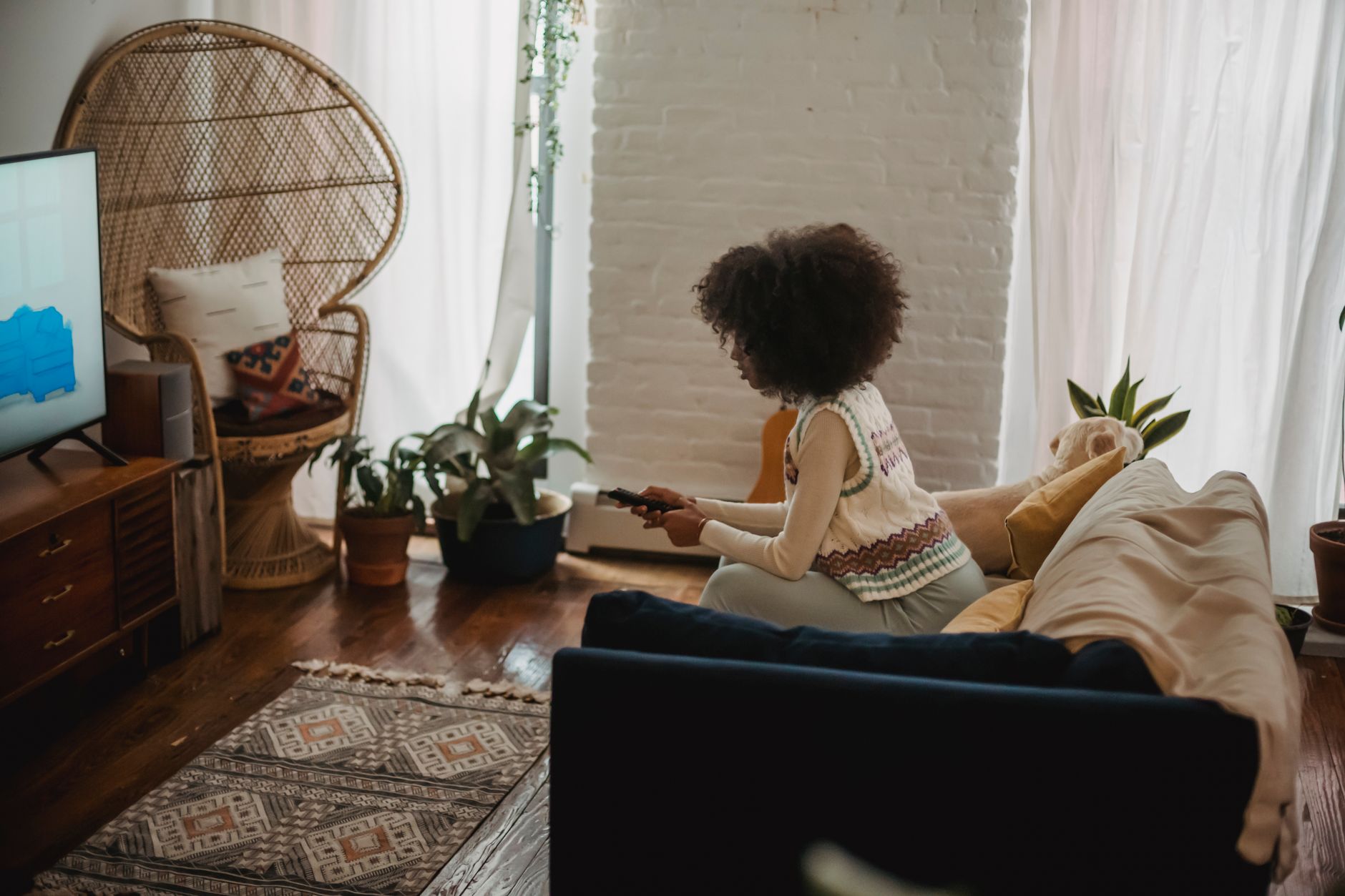
The overnight effect: what the search data actually shows
Fashion search platform Lyst has tracked what it calls “TV spikes” for several years now, and the pattern is consistent. A costume appears on screen on a Sunday night; by Monday morning, searches for that specific piece, or something close to it, are up significantly. During the run of a popular ITV series, those spikes can reach hundreds of percentage points for individual items. A silk slip dress worn in one episode, a particular shade of camel coat, a chunky gold chain, a pair of wide-leg trousers in a colour nobody was searching for the week before. They all follow the same curve.
ASOS sees this too, and so do NEXT and John Lewis. Retailers now monitor live Twitter and Instagram activity during drama broadcasts precisely because the gap between “I want that” and “add to basket” has collapsed almost entirely. Mobile shopping means the sofa and the checkout are the same location. ITV’s own commercial teams have been more open in recent years about working with costume departments to ensure pieces are, where possible, accessible to viewers. Not always designer. Not always expensive. Accessible.
Specific series, specific surges
The drama The Tower saw a noticeable surge in searches for structured blazers in dark navy following its most recent series. The character styling was deliberate: professional, slightly severe, quietly authoritative. British stylists I have spoken to say this kind of costuming is more influential than anything overtly glamorous, because viewers feel they can actually wear it. “The aspirational but achievable is what really moves product,” one London-based stylist told me. “Something a viewer can wear to her job, not to a red carpet.”
Imelda Staunton’s wardrobe in The Larkins generated its own quieter wave of interest in tea-length floral dresses and cinched-waist silhouettes. Brands like Laura Ashley and even M&S saw search uplifts in those specific cuts during transmission windows. And when Downton Abbey‘s spiritual successors appear on ITV in period-adjacent settings, the Regencycore and vintage-inspired searches that result can persist for weeks. If you have been following the way British period drama shapes what shoppers actually buy, the Regencycore fashion trend among UK shoppers goes well beyond Netflix; ITV is doing exactly the same thing in its own register.
Why costume designers are the most underrated people in fashion right now
Here is something the fashion press rarely gives enough credit to: ITV’s costume designers are making choices that shape the wardrobes of millions of people, with far less fanfare than a designer showing at London Fashion Week and far more practical reach. A piece chosen for a lead character in a primetime ITV drama will be seen by between four and eight million viewers in a single evening. That is influence most fashion editors can only dream of.
The national conversation around UK costume design has been growing, and TV sits right at the centre of it. Costume designers for ITV productions operate under constraints that make their choices even more deliberate: budgets that require sourcing from high street and mid-market brands, briefs that demand clothes reflect genuine British life rather than fantasy, and character development that relies heavily on visual shorthand. Every piece is a decision. Every decision, it turns out, has a downstream commercial effect.
The BBC’s costume team for Happy Valley found this out dramatically. Siobhan Finneran’s off-duty knitwear sparked what fashion journalists called a “cosy cop” moment in UK knitwear searches. ITV’s equivalent moments are less frequently written about but no less real.
How British stylists read the ITV effect
I put this to a couple of stylists who work with high street brands on trend forecasting, and the responses were surprisingly candid. One, who works regularly with NEXT and River Island on buyer briefings, told me plainly: “We watch Monday morning search data after ITV dramas the same way we used to watch the front row at Fashion Week. It tells us what women in Britain actually want right now, not what we think they should want.”
Another stylist, based in Manchester, pointed out that ITV’s regional production base means its costume choices often reflect a broader, more geographically representative idea of British women’s style than London-centric fashion media tends to. “A character in a Leeds-set drama wearing a particular coat from Debenhams’ successor brands or a Marks and Spencer knit reaches women who recognise themselves in it. That recognition is incredibly commercially powerful.”
This connects to something broader happening in British fashion right now. The quietly stylish British celebrities driving the most lasting trends are often the ones who dress like people rather than billboards. ITV drama costuming works on the same principle.
The morning-after shopping window
According to The Guardian’s fashion desk, the most significant retail spike after a TV broadcast now happens between 07:00 and 10:00 the following morning, when commuters are on their mobiles. Sunday night drama means Monday morning shopping. Retailers who have learnt to prepare for this, loading relevant product pages, setting up homepage features tied to drama air dates, and briefing their social media teams to respond in real time, see measurably better conversion rates than those who catch on a week later.
ASOS in particular has become adept at this. Their “as seen on screen” adjacent categories and rapid social response mean that when something lands on ITV at 21:00 on a Sunday, a lookalike version can be surfaced in search results by 09:00 Monday. The machine is fast. The appetite driving it is even faster.
What I find genuinely striking about all of this is how little of it gets acknowledged in mainstream fashion media, which still tends to credit trends to runway shows, influencers, or celebrity red carpet appearances. But for millions of British women, the fashion moment that actually changes what they buy is a Tuesday night ITV drama, a character who looks like someone they might know, wearing something they could genuinely afford. That is the most powerful fashion influence in Britain right now, and it is happening in plain sight.
Leave a Reply