There is something uniquely electric about a theatre costume that makes the audience gasp before a single line of dialogue has been delivered. I’ve sat in enough stalls to know that reaction well, that sharp intake of breath when a performer walks into the light wearing something nobody was expecting. This season, UK theatre costume design 2026 has produced more than its fair share of those moments, and the conversation outside the stage door has been anything but polite.
From the West End to regional repertory theatres in Leeds, Bristol, and Edinburgh, designers are pushing what costume can say, provoke, and challenge. Some of it is genuinely thrilling. Some of it has had critics reaching for their sharpest vocabulary. All of it is worth talking about.
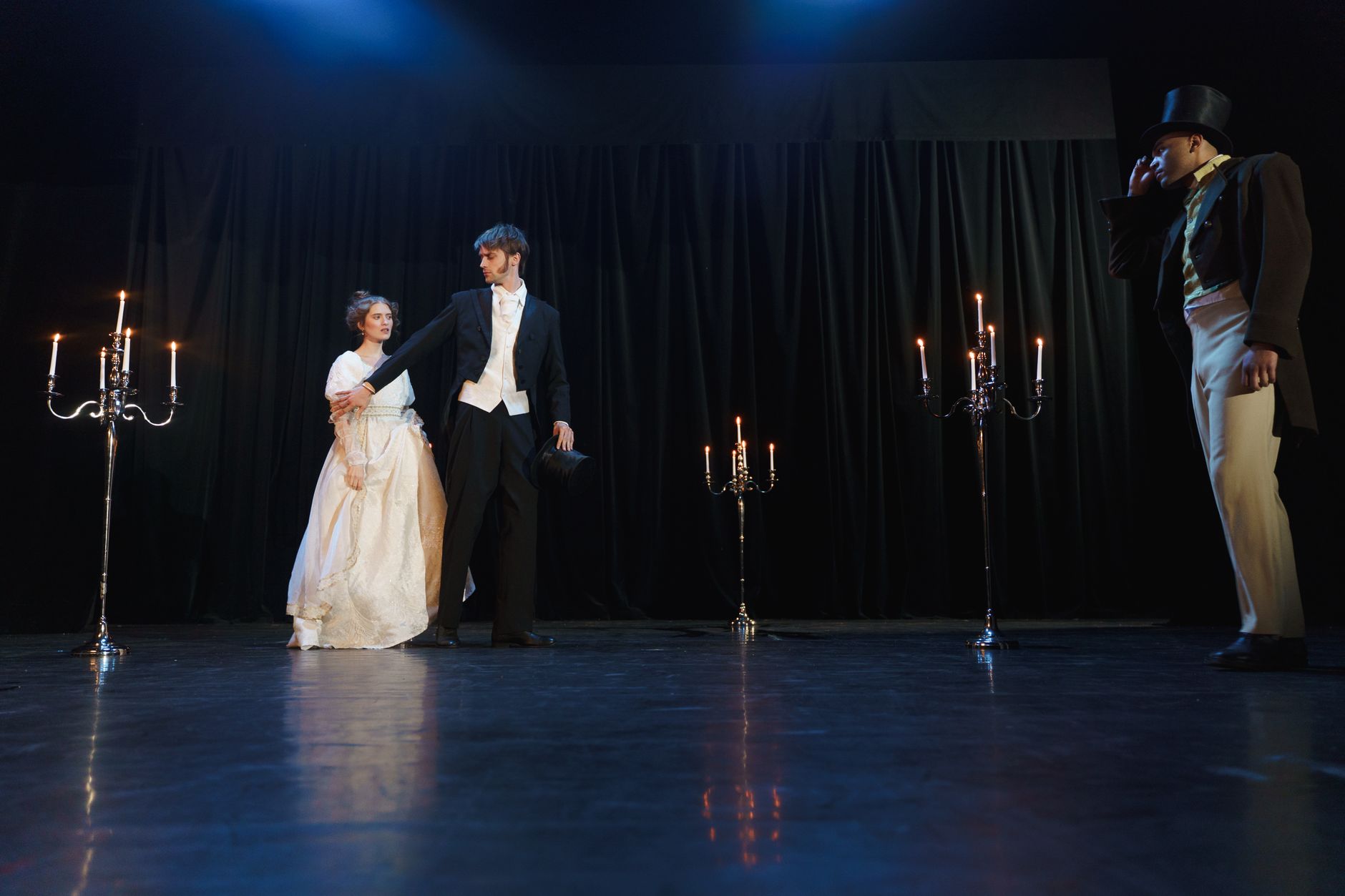
The West End looks that divided the press this season
Let’s start with the productions that generated the most noise. A major revival at the Donmar Warehouse this spring set social media alight by costuming a classical Greek tragedy in high-visibility workwear, safety boots, and fluorescent orange tabards. The director’s note described it as commentary on the invisible labour of working-class Britain. Several critics called it one of the most coherent design statements they’d seen in years. A vocal contingent of theatregoers, however, took to their keyboards to describe it as gimmicky and disrespectful to the source material.
I’d argue the very fact people are still arguing about it three months on is the point. A costume that nobody remembers has failed. A costume that gets its own angry letters column in The Stage has done something right, even if the something is controversial.
Meanwhile, a new musical at the Lyceum in London went in the opposite direction, drowning its cast in extraordinary, heavily structured Edwardian silhouettes rendered entirely in shades of ash grey and bone white. Not a single item of colour on stage for two and a half hours. The Guardian called it visually austere. The Daily Mail called it bleak. The production sold out its entire run within a fortnight of opening. People clearly wanted to see what the fuss was about.
Regional theatre is doing the most interesting work right now
I’ll be honest: I think the boldest UK theatre costume design 2026 has to offer is happening outside London. The Crucible in Sheffield staged a production of a Brecht play in which all the costume decisions were publicly debated and voted on by local community members before rehearsals began. The resulting combination of charity shop finds, donated workwear, and high-street pieces was deliberate and messy and oddly moving. It raised real questions about who gets to decide what storytelling looks like.
In Bristol, the Old Vic produced a new play about the gig economy in which performers wore algorithmically generated costume combinations, each outfit calculated by software to represent the wearer’s income bracket and digital footprint. It sounds like a conceptual exercise, but in practice it was quietly devastating. Audiences queued after each show to photograph particular outfits and post them with captions about their own working lives.
Edinburgh’s Lyceum, too, staged something worth noting: a reimagining of a Victorian novel in which all the female characters were costumed in contemporary professional dress, blazers and wide-leg trousers and court shoes, while male characters wore the period’s original silhouettes. Critics were split almost exactly down the middle. Audiences, from what I could gather speaking to people on the night, were largely fascinated rather than offended. The contrast made the power dynamics of the story impossible to ignore.
When does bold become too far?
This is the question I find myself coming back to. There is a meaningful difference between costume design that challenges the audience to think harder about a story and costume design that exists purely to generate press attention. The first is craft. The second is noise.
The line gets blurry in practice. A West End production this year dressed its historical figures in parody-adjacent versions of contemporary political fashion, complete with exaggerated shoulder pads and conspicuously branded accessories (the brands were fictional, but recognisable archetypes). Some saw it as sharp satire. Others felt it reduced serious historical figures to punchlines. The Costume Society, which keeps a close eye on how theatrical design is received and discussed across the industry, has noted that audiences increasingly want to be in on the design conversation, not just presented with decisions made without them.
That transparency matters. Productions that publish designer interviews, share concept sketches in their programmes, or host post-show discussions about the costume choices tend to get more generous audience responses, even when the choices themselves are provocative. People can disagree with a decision they understand. Opaque provocation just breeds resentment.
If you’re interested in how costume decisions feed into bigger conversations about representation and storytelling, the work being done in British television’s book-to-screen adaptations is running a very similar argument in parallel, and the costume designers working across both mediums are increasingly thinking about the two forms together.
What audiences are actually reacting to
According to UK Theatre, audience attendance figures for non-musical drama have risen steadily over the past 18 months, which suggests that provocative, talked-about productions are bringing people in rather than driving them away. The controversy, in other words, is doing its job.
I’ve noticed something anecdotally too. The productions that generate the most online argument tend to attract younger audiences for return visits. People bring friends specifically to have the argument in front of the thing itself. That is an unusual and rather brilliant effect for any art form to have.
UK theatre costume design 2026 is, at its best, asking audiences to bring their opinions into the room and leave with them sharpened. The designers doing the most interesting work, people like Kinnetia Isidore, whose work on a new commission at the National this spring used upcycled vintage textile specifically sourced from British charity shops, are thinking about costume as argument rather than decoration. That shift is seismic, and it’s happening right now, in venues across the country.
For anyone already paying attention to how fashion and identity intersect in public spaces, the conversation in theatre right now feels urgent in the same way that debates about influencer fashion advertising do, or the growing movement documented in British ethical clothing. Clothes, on stage or off, are never just clothes. They are the argument made visible.
So, shocking or groundbreaking? My honest answer is: often both, and that’s exactly as it should be.
Frequently Asked Questions
Which UK theatre productions have had the most controversial costume design in 2026?
Several productions have generated significant debate this season, including a West End revival using high-visibility workwear for a Greek tragedy and an Edinburgh production that dressed female historical figures in contemporary professional clothing. Regional theatres in Bristol and Sheffield have also produced costume concepts that attracted widespread commentary.
Who decides on costume design in UK theatre productions?
Costume design is typically handled by a dedicated costume designer working closely with the director and set designer. For major West End productions, this is usually a professional with formal training in theatre design, often from institutions like the Royal Academy of Dramatic Art or the London College of Fashion. Regional and fringe productions sometimes experiment with more collaborative approaches.
How can I find out more about the costume choices in a theatre production before I attend?
Most producing theatres now publish designer interviews and concept notes on their websites or in their programmes. UK Theatre’s website also carries production information and reviews, and many designers share process work on social media before and during a production’s run.