There’s a moment, usually somewhere between Afflecks and the backstreets off Tib Street, when it clicks. Manchester’s Northern Quarter isn’t just a cool place to grab a flat white and browse records. It has quietly, stubbornly, and brilliantly become one of the most interesting places in the entire country to buy clothes. I’ve spent time wandering those streets properly this year, and I came away convinced that the conversation about British independent fashion needs to start including Manchester a lot more loudly.
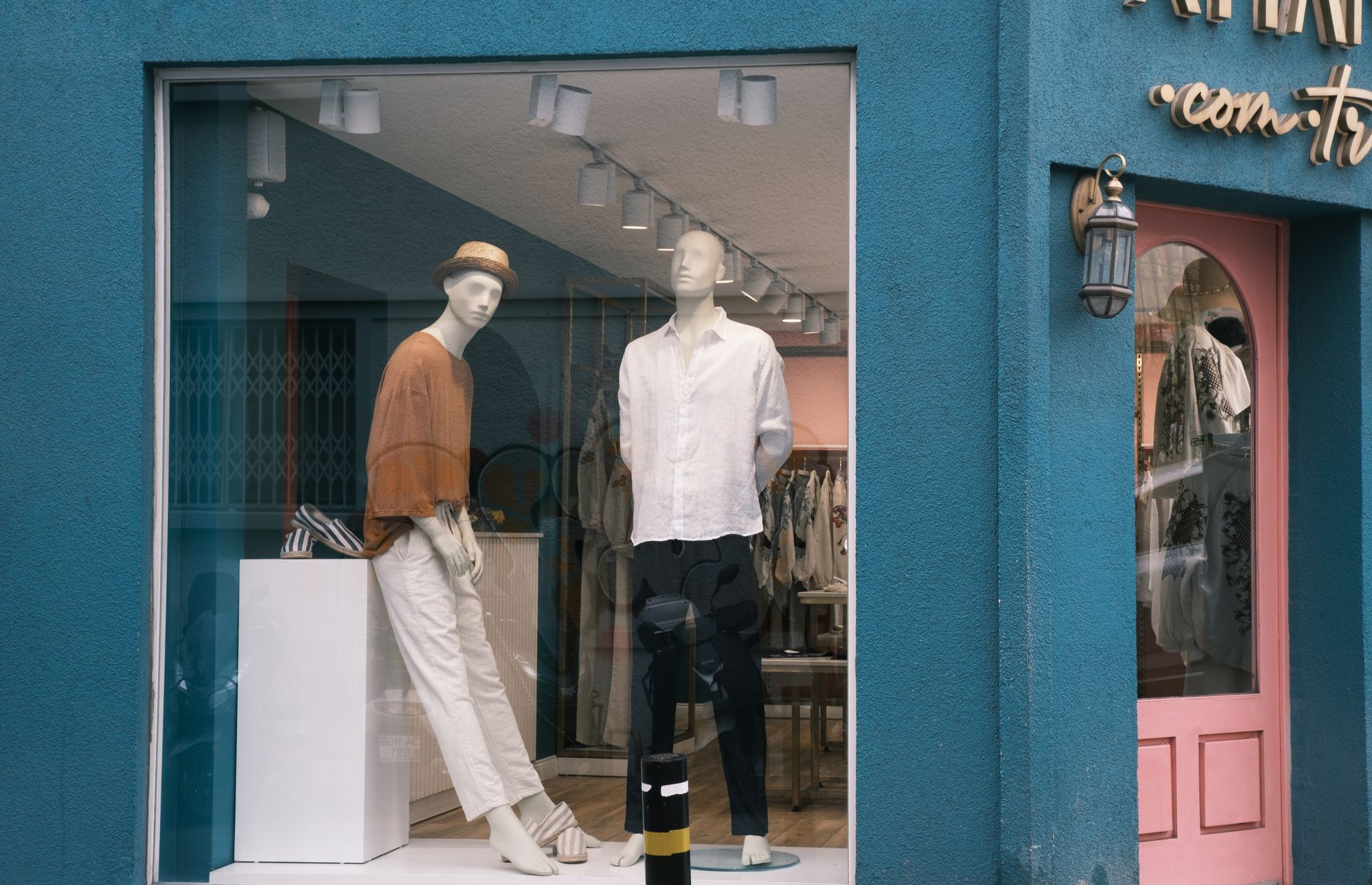
For years, the default assumption in fashion journalism was that if it didn’t happen in London, Shoreditch, Brick Lane, the clutch of labels clustered around the East End, it didn’t quite count. That assumption is looking increasingly embarrassing. Manchester’s Northern Quarter now has a density of Manchester independent fashion shops, vintage sellers, and emerging designers that genuinely rivals anything the capital has to offer, often at better prices and with far less attitude. The city’s creative energy has always been real; what’s changed is that the fashion infrastructure has caught up.
The boutiques that are doing something genuinely different
Walk along Oldham Street on any Saturday and you’ll pass a string of shops that don’t feel like anywhere else in the UK. Oi Polloi, which has been a fixture in the neighbourhood for over two decades, remains the gold standard for understated British menswear done with real conviction, stocking labels like Norse Projects, Engineered Garments, and a rotating selection of pieces you won’t find in any chain. It has that rare quality of a shop with a genuine point of view.
Beyond the established names, newer independents are carving out their own space. There’s a growing cluster of boutiques run by women in their twenties and thirties who grew up here, left for a bit, came back, and decided the Northern Quarter was where they wanted to build something. The conversations I had in these shops were sharp and specific, about fabric sourcing, about the difference between trend-chasing and actually dressing for a life. That kind of curatorial intelligence is hard to manufacture, and it’s very much present here.
Vintage in Manchester: a whole different league
Afflecks Palace is the obvious starting point and deserves every word of its reputation. The four-floor indoor market on Church Street has been a counterculture landmark since 1982, and in 2026 it remains genuinely essential. The vintage sellers inside range from obsessive collectors specialising in deadstock 1990s sportswear to stalls doing beautifully curated Y2K pieces at prices that don’t make your eyes water. It’s chaotic, loud, and completely brilliant.
But the Northern Quarter’s vintage scene extends well beyond Afflecks. Several standalone shops have opened in the past couple of years specifically because rents in the area, whilst rising, remain substantially lower than equivalent space in East London. That financial reality has given sellers the breathing room to actually curate rather than pile it high. I’d argue Manchester’s vintage offer right now, in terms of quality, breadth, and value, is the best outside London, and for certain categories (particularly 1980s and 1990s British casualwear) it might actually be the best full stop. If you’re interested in how the broader vintage market has grown across the country, it’s worth reading about why British high streets are filling up with vintage stores, because Manchester is very much part of that story.
The designers making things in the city
What separates a genuinely interesting fashion district from a street full of nice shops is the presence of people actually making things. The Northern Quarter has that. A handful of small studios and ateliers have set up in the area’s older industrial buildings, and some designers are selling directly from their workspaces, which creates a completely different kind of shopping experience. You’re not just buying a garment; you’re often meeting the person who constructed it and hearing exactly why they made the choices they made.
The Northern Quarter’s designers tend to work in two distinct registers. Some are doing accessible, wearable pieces with strong commercial instincts, building wholesale relationships with other independents across the North. Others are working at a more experimental scale, producing limited runs, collaborating with musicians and artists, and treating clothing as something closer to a cultural object than a product. Both approaches feel legitimate and alive here in a way that doesn’t always survive contact with the capital’s more competitive, more expensive environment. It’s a different creative ecosystem, and for some makers it’s clearly the right one. Scotland has something similar brewing, as I noticed when looking at how Scotland’s young designers are disrupting British fashion from the north, there’s genuinely something happening beyond the M25.
What the Northern Quarter gets right that London often doesn’t
The comparison to London’s East End is instructive, but not quite in the way you might expect. The Northern Quarter isn’t trying to be Shoreditch with a northern accent. It has its own character, shaped by Manchester’s specific culture: post-industrial pragmatism, a long tradition of grassroots music and arts scenes, and a particular kind of community loyalty that means locals genuinely support the independents on their doorstep.
Prices are one obvious difference. A genuinely well-made independent label piece in the Northern Quarter will typically cost you meaningfully less than an equivalent item in East London, partly because overheads are lower and partly because the market here is less willing to absorb London pricing simply because a postcode sounds cool. That keeps sellers honest in a useful way.
The lack of tourist-trap cynicism matters too. Too many of London’s once-interesting independent areas have drifted into selling expensive nostalgia to visitors rather than actual clothes to people who live there. The Northern Quarter still feels primarily oriented toward its own community, students, creative professionals, musicians, people who actually live in Manchester and surrounding areas like Salford and Chorlton. That groundedness produces better shops.
Is the Northern Quarter under threat?
The honest answer is: a bit. Rents have risen noticeably over the past three years as the area’s profile has grown, and a few independents that were fixtures five years ago have closed or relocated further out. Manchester City Council has made noises about protecting the area’s character, but planning pressures and new development are real concerns. The BBC’s Manchester coverage has documented some of the tensions around the neighbourhood’s rapid change, and people who’ve been here for decades are watching carefully.
The silver lining is that Manchester’s creative community has shown real resilience. When venues or shops close in the Northern Quarter, something new tends to appear in its place within months. The city has a habit of regenerating from within rather than waiting for external investment to rescue it, and that instinct applies to its fashion scene as much as anywhere else. The Manchester independent fashion shops that are thriving right now seem acutely aware of what makes the area worth preserving, and many are actively involved in community organising around those issues.
Why this matters for British fashion more broadly
The Northern Quarter’s rise as a genuine fashion destination is part of a bigger shift in how British style works. The old model, where London sets the agenda and everywhere else follows six months later, is breaking down. I’ve seen it in the influence of British soap wardrobes on high street buying decisions, and I see it even more clearly in the way Manchester’s independent scene is developing its own aesthetic logic rather than simply mirroring the capital.
If you haven’t spent a proper afternoon in the Northern Quarter recently, go. Go on a weekday if you can manage it, when it’s less crowded and the shop owners have time to talk. Go with an open mind and some cash, because not everywhere takes card gracefully. Go prepared to find things you weren’t looking for. That openness is exactly what the best Manchester independent fashion shops reward, and it’s what makes the whole district feel, right now, like somewhere that genuinely matters.