Nobody warned me that my wardrobe would become the enemy. The jeans that fit brilliantly in January suddenly felt like a punishment by March. My trusty silk blouses became unwearable after one too many hot flushes in a meeting. If you are somewhere in that perimenopausal stretch, maybe in your early forties or pushing fifty, and you have started to feel like your clothes no longer make sense for the body you are actually in, you are not imagining things. Your body is genuinely changing, and your wardrobe needs to catch up.
The good news is that more UK stylists are now specialising in exactly this transition. Not in a patronising “dress for your age” way, but in a genuinely practical, empathetic way that treats perimenopause as a style challenge worth solving rather than a reason to hide. I spoke to several of them and gathered their best advice below.
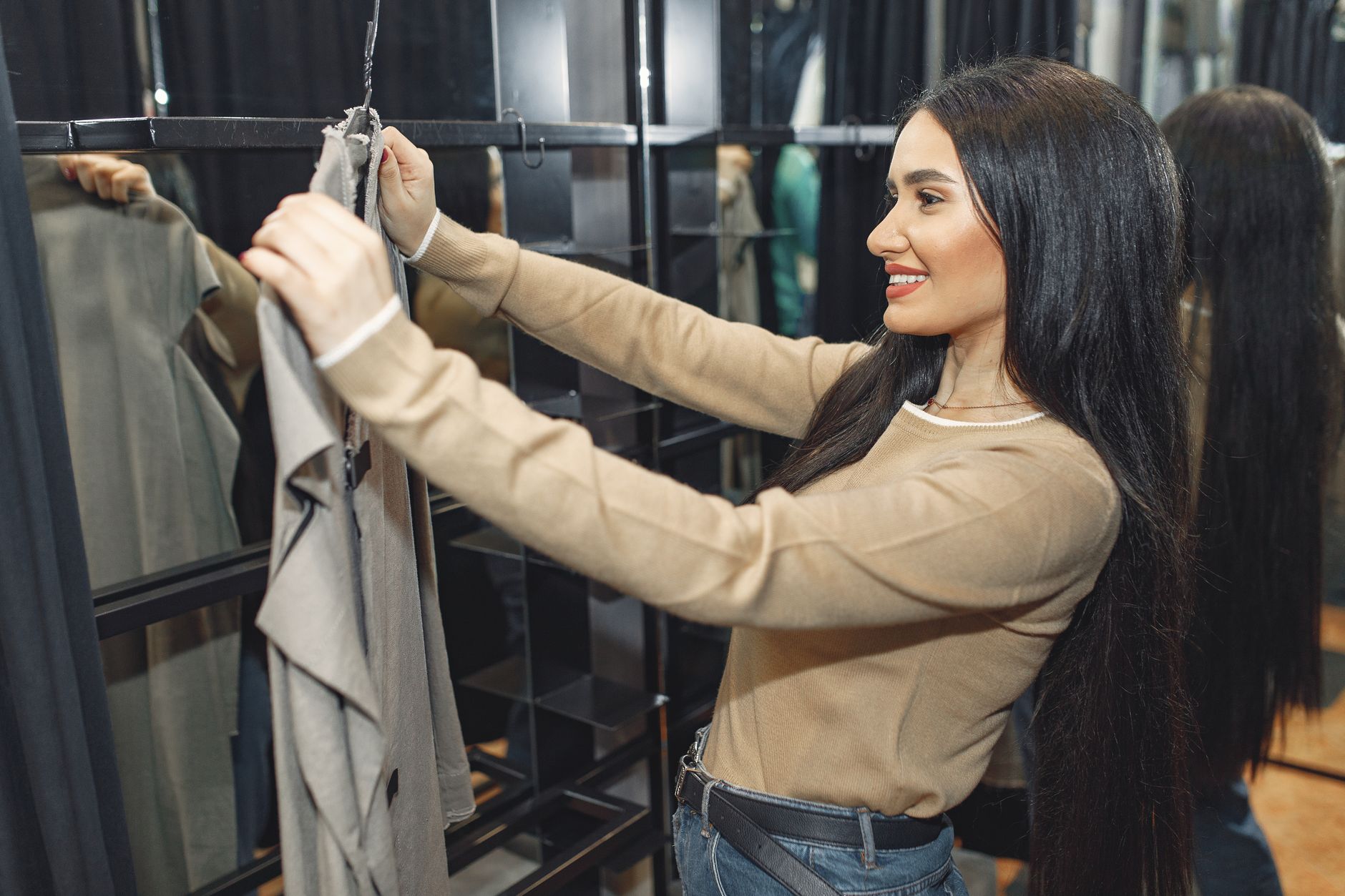
What actually changes about your body during perimenopause
Before talking fabric and fit, it helps to understand what is physically happening. Oestrogen levels drop and fluctuate, which can cause the body to redistribute fat, particularly around the abdomen and waist. Skin can become drier or more sensitive. Body temperature regulation goes haywire for many women, which is where the notorious hot flushes come in. Bloating is common and unpredictable. Some women experience joint aches that make certain waistbands unbearable.
According to the NHS, perimenopause can begin as early as your mid-thirties, though most women experience it in their mid-to-late forties, with the average age of the actual menopause in the UK being 51. That means perimenopause can last a decade. A decade of working with a body that is behaving differently each season. Dressing for that takes strategy, not self-criticism.
The fabric question: what UK stylists actually recommend
Fabric is where perimenopause fashion advice UK stylists tend to start. And they are very clear on this: natural fibres are non-negotiable.
Cotton, linen, merino wool and bamboo all breathe in a way that synthetic fabrics simply do not. A polyester blouse might look identical to a cotton one on the hanger, but in practice it traps heat against the skin. For women managing hot flushes, that is a real problem. Merino wool is particularly brilliant because it regulates temperature in both directions, keeping you cool when warm and warm when cool.
Bamboo fabric has quietly become a favourite among women navigating this transition. It is moisture-wicking, incredibly soft on sensitive skin, and widely available on the British high street now, including at Marks and Spencer and John Lewis. If your skin has become more reactive, bamboo is worth trying before you assume your old favourites simply do not work anymore.
One stylist I spoke to was emphatic about linen in particular: “Women often avoid it because it creases. But I would rather wear something that breathes properly and needs a press than something that looks pristine and makes me miserable by 11am.” Hard to argue with that.
Fit and cut: making peace with a body that is still yours
The waist is where many women feel the most conflict during perimenopause. Midsection weight gain is common and can feel sudden. Clothes that were once a reliable fit start to pull or pinch in ways that feel unsettling rather than just inconvenient.
The answer, according to UK stylists who work with women in this life stage, is almost never to go up a size in everything. Sizing inconsistency across the British high street is already a genuine headache (if you have ever been a size 12 in one shop and a size 16 in another, you will know exactly what I mean), so fixating on the number inside your clothes is pointless. Instead, the advice is to identify where you actually need more room and adjust accordingly.
Wide-leg trousers are having an extended moment on the high street right now, and they are genuinely useful here. They sit at or below the natural waist, give room through the hip and thigh, and create a long vertical line. Wrap dresses are another consistent recommendation from stylists because they allow for day-to-day fluctuation without needing to be a precise fit. Midi lengths work particularly well for women who find their leg temperature changes unpredictably.
Empire-line tops and dresses can be helpful too, though the stylist caveat is always: make sure the structure is right. A droopy empire line does nothing for anyone. Look for pieces where the seam sits at a natural high point and the fabric falls cleanly from there.
Layering as a lifestyle strategy, not just a styling tip
I have written before about how confusing British dress codes have become in 2026, but for women in perimenopause the layering question is far more personal than professional. It is about being able to add and remove without drawing attention to yourself in a boardroom or a restaurant.
The trick, stylists say, is to invest in transitional layers that actually look like part of the outfit rather than an emergency measure. A fine-knit merino cardigan, a structured blazer in a lightweight fabric, or a longer linen shirt worn open over a camisole all work on this principle. You look considered. You also have an escape route when the flush hits.
The undergarment question matters here too. Seamless, moisture-wicking underwear and camisoles mean that when you do remove a layer, what is underneath still looks intentional. Brands like Charnos, which has been making British lingerie for decades, and Sloggi both offer comfortable options designed for changing bodies.
Shopping smarter: where UK women are finding perimenopause-friendly fashion
There is no single perimenopause fashion destination on the British high street yet, which honestly feels like a missed opportunity given that millions of women in the UK are in this life stage at any given time. But there are good options scattered across several retailers.
Marks and Spencer’s linen and bamboo ranges have consistently received strong word-of-mouth amongst women looking for breathable, well-cut basics. Their wider-leg trousers and wrap-style dresses are frequently cited. Boden’s cotton and linen pieces tend to be well-made and available in longer lengths. For more directional pieces, some women are finding the independent brands in Manchester’s Northern Quarter and among Scotland’s emerging independent designers more accommodating of real body variation than the big chains.
Online rental is also worth considering. For events, weddings, and occasions where you want to wear something special without committing to a purchase in a body that is still settling, clothing rental platforms let you try styles risk-free.
The emotional side: stylists talk about confidence, not just clothing
Every stylist I spoke to said the same thing unprompted: the biggest barrier for women seeking perimenopause fashion advice is not information, it is confidence. Many women feel that their changing body is somehow failing them, and that feeling bleeds into every shopping experience.
My take is that this is the actual work. The clothes matter, but the story you are telling yourself about what you deserve to wear matters more. You are not dressing a body in decline. You are dressing a body in transition, which is an entirely different thing. Give yourself permission to buy something beautiful that fits now, not something aspirational that might fit later.
The best perimenopause fashion advice UK stylists consistently give comes down to this: start with fabric, sort the fit without obsessing over the label size, build a layering system that works quietly in the background, and stop buying clothes for a body you used to have. This one, right now, deserves something good to wear.
Frequently Asked Questions
What fabrics are best for hot flushes during perimenopause?
Natural, breathable fibres are your best option: cotton, linen, bamboo and merino wool all regulate temperature better than synthetic fabrics. Bamboo is particularly good because it is moisture-wicking and soft on sensitive skin, and it is widely available on the British high street at retailers like Marks and Spencer and John Lewis.
How do I dress for perimenopause weight gain around the middle?
Stylists recommend looking at cut rather than simply sizing up across the board. Wide-leg trousers, wrap dresses, and empire-line tops all give room around the midsection without sacrificing shape. The goal is identifying where you specifically need more room and choosing styles that accommodate that, rather than buying everything a size larger.
Is there UK-specific perimenopause fashion advice for the office?
Layering is the key workplace strategy. A fine-knit merino cardigan or lightweight structured blazer over a breathable base layer lets you adjust discreetly throughout the day. Seamless camisoles underneath mean removing a layer still looks intentional rather than chaotic.
Where can I find stylists in the UK who specialise in dressing women through perimenopause?
Personal stylists who specialise in life transitions are increasingly common across the UK, particularly in London, Manchester, Edinburgh and Bristol. Search for stylists who list ‘midlife’, ‘body confidence’ or ‘hormonal changes’ in their service descriptions, or ask for recommendations in dedicated perimenopause support communities on Facebook or Mumsnet.