

There’s a moment every summer at Silverstone where the fashion becomes almost as interesting as the race itself. I’ve watched it happen: women in silk slip dresses standing next to men in full team replica jackets, everyone competing for the best spot near the pit lane, and all of it feeling somehow completely coherent. British motorsport fashion is its own world, and it’s been quietly bleeding into the high street for longer than most people realise.
Racing culture and clothing have always been entangled. From the leather helmets and goggles of early Grand Prix drivers to the sharp, logo-heavy firesuit aesthetic of modern Formula One, the visual language of motorsport is instantly recognisable. What’s less obvious is how much of that language has ended up on your local high street, in your favourite weekend outfit, possibly without you even clocking the connection.
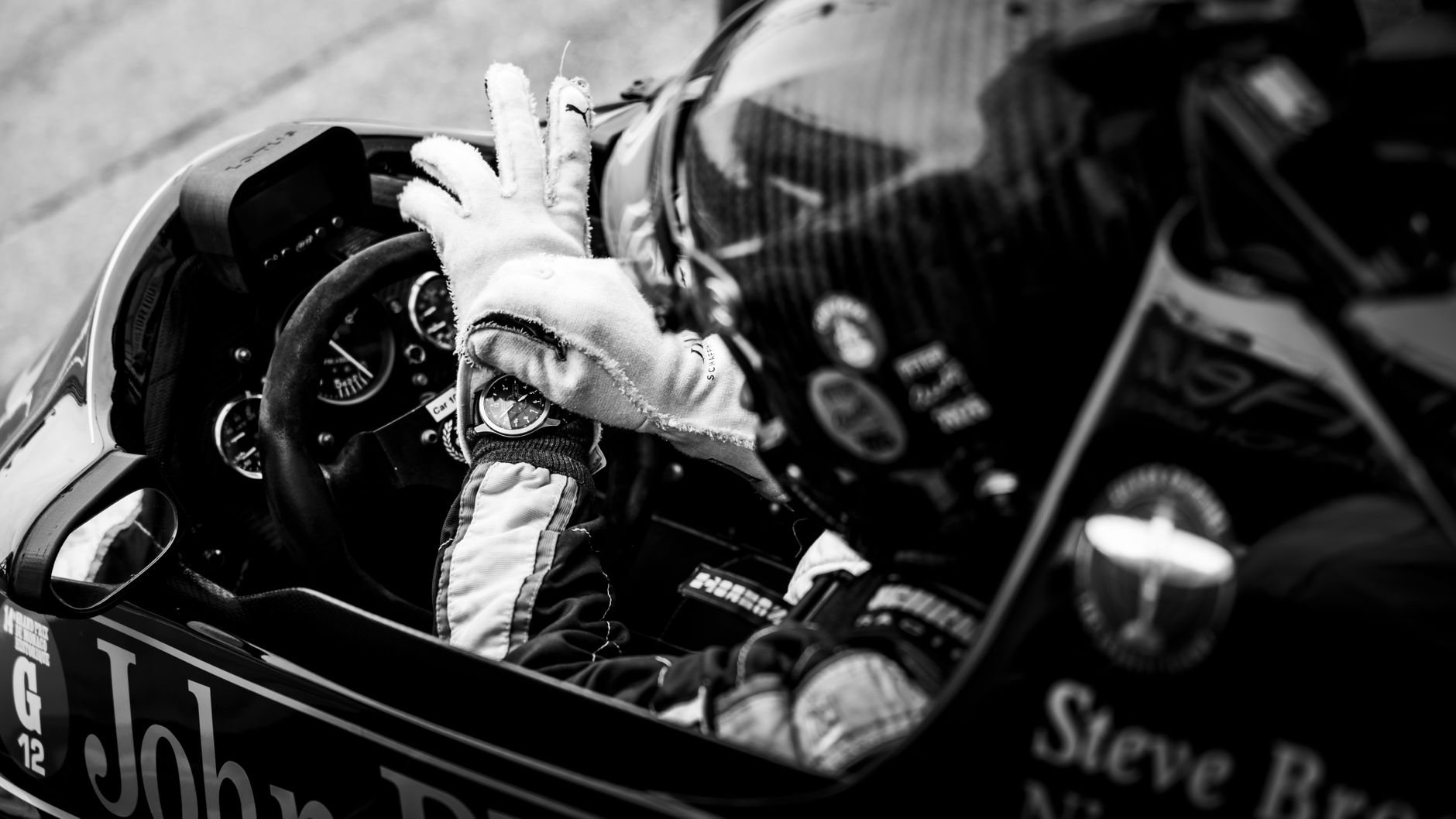
Why racing has always been a style reference
British motorsport has produced some genuinely iconic visual moments. Think of Stirling Moss in the 1950s, cutting a sharp figure in open-cockpit cars, or Jackie Stewart’s tartan-banded helmet becoming one of the most recognisable personal signatures in sport. These weren’t accidental style choices. Drivers understood that their image mattered, and the fashion world was paying attention.
The firesuit itself is a fascinating object from a design perspective. Born out of necessity (the materials have to be flame-resistant, lightweight, and allow full movement at speed), it evolved into something genuinely elegant. The fitted silhouette, the contrast piping, the layered sponsor logos arranged almost like a graphic print: by the 1970s and 1980s, designers were openly borrowing from it. Helmut Lang cited racing culture. So did Miuccia Prada. And much closer to home, British labels including Barbour and Belstaff built entire product lines around the motorsport connection, their waxed jackets originally designed for riders who needed protection from the elements before it became a countryside wardrobe staple.
The British drivers who became genuine style icons
You can’t talk about British motorsport fashion without talking about the drivers themselves. Lewis Hamilton is the most obvious contemporary example: his personal style has evolved from understated teamwear to full runway-adjacent looks, and his partnerships with luxury houses including Tommy Hilfiger and, more recently, his involvement with fashion weeks, have put a racing driver at the centre of the style conversation in a way that hasn’t happened since James Hunt was gracing the covers of magazines in the 1970s.
Hunt is worth pausing on. He wore his firesuit open to the waist. He turned up to press events in a way that felt genuinely subversive. His whole persona suggested that going fast and looking good were two entirely compatible pursuits, and a generation of British men quietly took note. I’d argue that Hunt’s influence on a certain kind of louche, confident British masculinity in fashion is still being felt today, just filtered through several decades of reinvention.
More recently, British drivers like Lando Norris have brought a different energy: streetwear-adjacent, deeply connected to gaming and youth culture, with a fanbase that treats his off-track wardrobe as seriously as anything he does in the cockpit. His collaboration with McLaren’s lifestyle arm has produced pieces that sell out quickly and end up on resale platforms at elevated prices. That’s not a sports merchandise story. That’s fashion.

How motorsport subcultures develop their own dress codes
Away from the glamour of Formula One, there’s an equally compelling style story happening at a grassroots level. British car culture, in all its forms, has always had a visual identity. The modified car scene is a particularly interesting case. Events like cruise nights and car shows across the UK have produced distinct dress codes that mix streetwear, workwear, and motorsport references in ways that feel genuinely original. If you want a sense of how these communities function and what brings them together, how UK car meets actually work in 2026 is a genuinely fascinating read on the subculture itself.
The people who show up at these events have thought carefully about what they’re wearing, even if they’d never describe it that way. Bomber jackets, high-quality denim, branded caps, technical footwear. There’s a coherence to it that mirrors the attention given to the cars themselves. Cruise Sites is a good example of a platform that understands this community from the inside, covering the practical side of modified car ownership alongside the culture that surrounds it.
This grassroots aesthetic has fed back upwards into mainstream fashion in ways that are sometimes credited elsewhere. The bomber jacket, for instance: it has aviation and motorsport roots, migrated through subcultures, and is now a permanent fixture at every price point on the British high street. The technical fabric trend that has dominated menswear for several years now owes more to racing and motorsport engineering than to any runway collection, even if the runway collections were where it got its mainstream visibility.
What the high street actually borrowed
If you map what British motorsport contributed to everyday fashion, the list is longer than you’d expect. Racing stripes are the obvious one: that simple two-stripe or three-stripe detailing down the side of a jacket or trouser leg that recurs in every decade without ever feeling dated. Technical fabrics, particularly lightweight nylons and moisture-managing weaves, moved from team kit into everyday athleisure long before “athleisure” was a word anyone used. The colour palette of motorsport, specifically the combination of bold primary colours against black or white, is so embedded in British sportswear design that it barely registers as a reference anymore.
Logo placement is another direct inheritance. The sponsorship model of racing, where brands cover every available surface of a car and driver, normalised a certain approach to logo-heavy design that fed directly into the premium streetwear aesthetic that has defined fashion for the past fifteen years. Supreme, Palace, even Burberry’s TB monogram mania: all of it is more comfortable existing in a cultural landscape that racing helped to shape.
The BBC’s Formula One coverage has also kept motorsport firmly in the mainstream British consciousness, which matters: fashion references only stick when people recognise them, and decades of race broadcasting have made the visual world of motorsport genuinely familiar to British audiences who have never set foot at a circuit.
Where British motorsport fashion sits in 2026
Right now, the relationship between British motorsport fashion and the wider clothing market feels particularly alive. The so-called “gorpcore” trend, with its emphasis on technical, functional garments designed for performance, is essentially a walking tribute to the utilitarian design principles that have driven motorsport kit for decades. Meanwhile, the luxury end of the market continues to chase the racing aesthetic through capsule collections and brand partnerships.
What I find most interesting is the way fashion moves in both directions here. It’s not just that racing influences the high street. The high street also shapes what people wear to races, to car shows, to cruise nights. Communities develop their own visual languages from everything available to them, and then those languages get absorbed back into the mainstream. It’s the same feedback loop I’ve seen in discussions about how British actresses quietly influence what ends up in high street shops, or the way subculture-specific dressing eventually becomes everyone’s Tuesday outfit.
The sizing and accessibility questions matter here too. One of the barriers to the technical clothing market, which has strong motorsport DNA, is that it hasn’t always catered to all body types. That’s changing slowly, but the same inconsistencies that affect UK clothing sizing more broadly are present in technical and sportswear lines as well.
British motorsport fashion is not a niche interest. It’s woven into the fabric of how this country dresses, in ways so fundamental that we’ve mostly stopped noticing. The next time you reach for a bomber jacket, a racing stripe, or a technical fabric that feels just right for a Saturday out, you’re wearing a little bit of Silverstone, whether you knew it or not.
Frequently Asked Questions
How has British motorsport influenced everyday UK fashion?
British motorsport contributed a range of design elements that are now standard in high street clothing: racing stripes, technical fabrics, bold primary colour palettes, and logo-heavy styling. These moved from team kit and racing culture into mainstream fashion gradually over several decades, accelerated by the visibility of events like the British Grand Prix.
Which British racing drivers have had the biggest impact on fashion?
Lewis Hamilton is the most prominent contemporary example, with high-profile collaborations in the luxury and streetwear space. James Hunt in the 1970s arguably set the template for the racing driver as style icon in Britain. More recently, Lando Norris has connected motorsport aesthetics to youth and streetwear culture, with collaborative merchandise that sells out rapidly.
What is the connection between modified car culture and fashion?
The modified car and cruise night scene in the UK has developed a distinct visual identity that blends streetwear, workwear, and motorsport references. Participants often wear specific clothing that signals community membership, from bomber jackets and technical footwear to branded caps, creating a grassroots fashion subculture with real influence on broader trends.
Are racing-inspired clothes available on the British high street?
Yes. Racing stripes, bomber jackets, and technical fabric pieces with motorsport heritage are available at most major high street retailers, from Marks and Spencer to ASOS. Premium versions appear in collaborations from brands like McLaren’s lifestyle line, Belstaff, and Barbour, all of which have explicit roots in motorsport or motorsport-adjacent culture.
Leave a Reply